
 3.5 mm
Start here
Which plug your phone takes
One look at the bottom edge of the phone settles which of our pairs will work. Here is what changed, what an adapter costs you, and why laptops are a different story.
Look at the bottom edge before anything else
Every other question about a wired pair comes after this one. Housing shape, cable braid, what sits under your thumb, none of it matters if the pin does not go into the hole. Turn the phone over and look at the bottom edge. You are looking for either a small round hole about the width of a pencil lead, or a flat oval slot with rounded ends.
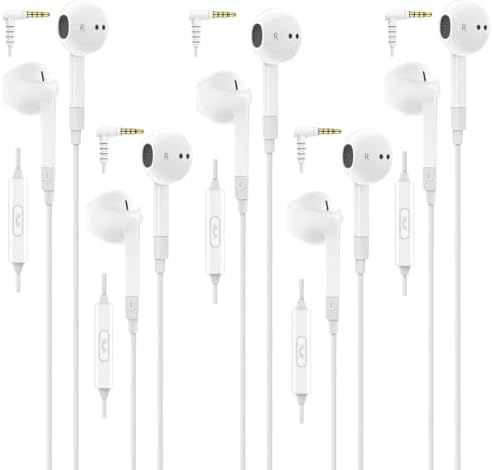
The round hole is the 3.5 mm jack, the same socket that has been on audio gear since the 1960s. The flat oval is USB-C, and if that is the only opening down there, a round pin has nowhere to go. We build the same lines on both plugs for exactly this reason, so the answer to the port question never forces you into a housing you did not want.
What changed, and when
Phone makers started dropping the round socket around 2016, and the last big holdout moved over in 2023 when the iPhone went to USB-C. So the rule of thumb by year is rough but useful: a phone bought in the last few years almost certainly has no round hole, and a phone older than that probably does.
This is why so many people end up here confused. They had a drawer pair that worked on every device in the house for a decade, they bought a new phone, and the old cord stopped fitting. Nothing broke. The hole moved.
The adapter route, and what it actually costs
You can put a round-jack pair on a USB-C phone with a small adapter, and it works properly, audio and microphone both. We are not going to pretend otherwise. But be honest with yourself about the shape of the thing you are adding: a loose plastic nub, an inch long, living between your cord and your phone.
It wobbles in a pocket. It stays behind on the train seat. It ends up in the bottom of a bag with the keys. If the pair is going to travel with you every day, a cord that ends in the right plug already is one less small object to keep track of. If the pair is going to sit at a desk next to a laptop that has the round hole anyway, the adapter question never comes up.
Laptops and controllers are a different story
Desktop and laptop machines kept the round jack far longer than phones did, and plenty of current ones still have it, usually as a single combined socket that carries both the audio out and the microphone in. Game controllers kept it too. So the pair that will not fit your phone may be exactly the pair that belongs at your desk.
If you are buying for the desk rather than the pocket, check the laptop the same way you checked the phone, and remember that a machine with a USB-C port will also take a USB-C pair directly. Many people end up with one of each, and that is not a mistake. It is one cord that never leaves the desk and one that lives in the bag.


Workbench articles
Getting a seal with ear tips
Sound that came out thin and tinny is almost never a broken driver. It is a tip that never closed the ear canal. How to seat foam properly and when to swap.
Keep readingHow a wired pair stays quiet
No circuit, no battery, no cancellation. Just a foam tip filling the canal. What that blocks well, what it will not touch, and why we left the battery out.
Keep readingThe cable is the weak point
Drivers rarely fail. Cords fail, and nearly always at the same three bends. What kills a cable, how to pull a plug, and how to wind a cord that will not knot.
Keep reading
What is your jack?
Two questions. The first is about the socket you plug into, because that rules more pairs in and out than anything else here. The second is about what you are actually doing while you wear them, because that is what each line was built around.